
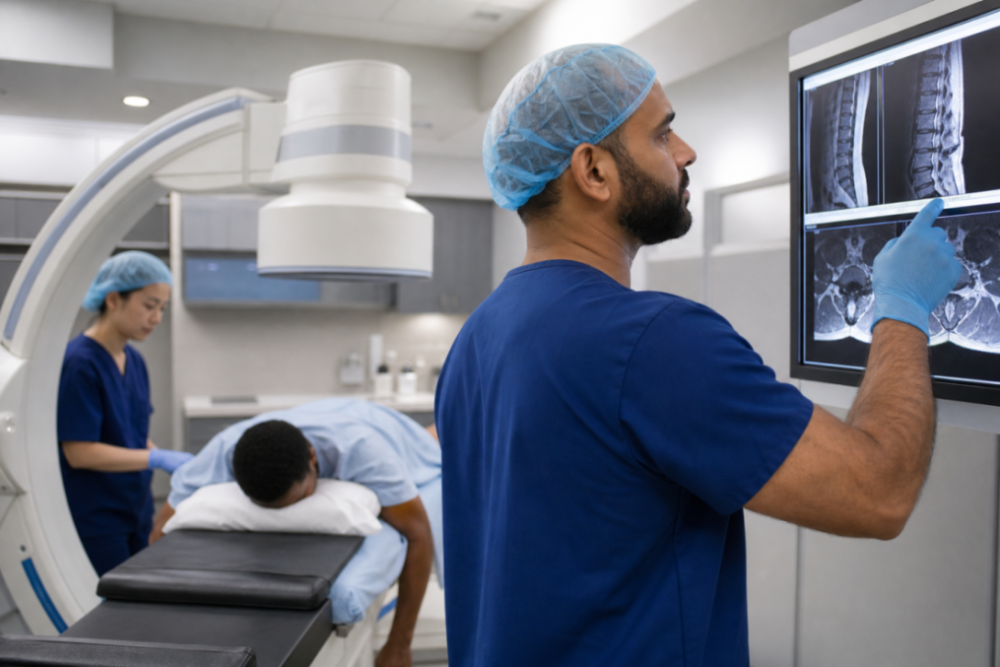
Percutaneous disc decompression is a minimally invasive, image-guided outpatient procedure that can reduce pain from certain small-to-moderate disc herniations by removing or shrinking disc material. It may be an option when conservative care has not relieved symptoms and when imaging and a clinical exam match.
Pain from a herniated or bulging disc can range from a dull ache to sharp, radiating pain with numbness or weakness. For some patients, percutaneous disc decompression offers a targeted, tissue-sparing way to reduce pressure on nerve roots without open surgery. This article explains how the procedure works, who is likely to benefit, what to expect during recovery, and how MK Spine & Joint evaluates candidates at our Garden City and Hauppauge offices.
What is percutaneous disc decompression?
Percutaneous disc decompression encompasses a family of image-guided, minimally invasive techniques (for example, nucleoplasty or percutaneous discectomy) that remove, vaporize, or shrink a small amount of nucleus pulposus—the soft center of an intervertebral disc—to reduce internal pressure and the degree of disc protrusion. Procedures are performed through a small needle or cannula under local anesthesia and fluoroscopic guidance, usually as same-day outpatient care.
How does it reduce neck or back pain?
When a disc bulge or contained herniation presses on a nearby nerve root, patients can experience radiating pain, numbness, or weakness. By removing a small volume of disc material, decompression lowers intradiscal pressure and may retract the bulge slightly, easing mechanical irritation of the nerve and reducing inflammatory mediators that drive pain.
Who is a good candidate?
Percutaneous disc decompression is not appropriate for everyone. Typical candidates include patients who:
- Have symptomatic contained disc herniations (small-to-moderate bulges) confirmed on MRI
- Have radicular pain (arm or leg pain) or axial pain correlating with imaging and exam findings
- Have tried conservative care—physical therapy, medications, activity modification—for several weeks without adequate relief
- Do not have significant spinal instability, severe central canal stenosis, or large/sequestered disc fragments that require surgical removal
Our clinicians use a detailed history, physical exam, and imaging review before recommending a procedure. For more on diagnosis and nonoperative options, see our Herniated Disc Diagnosis and Minimally Invasive Care page.
How is the procedure performed?
Procedures vary by technique but follow common steps:
- Preprocedure review of imaging and informed consent.
- Positioning and local anesthesia; conscious sedation as appropriate.
- Needle or small cannula placement into the affected disc under fluoroscopic (x‑ray) guidance.
- Targeted removal, ablation, or coblation of a small volume of nucleus material.
- Observation and brief recovery in the outpatient area before discharge.
Because the incision is tiny and tissue disruption minimal, most patients go home the same day. MK Spine & Joint performs image-guided, outpatient procedures and coordinates postprocedure rehabilitation with our physical therapy team. Learn more about our outpatient approach in Outpatient Pain Management and Rehabilitation in Hauppauge.
Benefits and limitations
Potential benefits include less soft-tissue trauma than open surgery, shorter recovery, and preservation of spinal structures. Many patients report meaningful pain reduction and improved function when the disc and symptoms are well matched.
Limitations are important: percutaneous decompression is most effective for contained herniations and less helpful for large, migrated, or sequestered fragments. It is not a substitute for decompressive surgery when there is progressive neurological deficit (for example, increasing weakness) or severe spinal compression.
Risks and possible complications
Complications are uncommon but can include infection, bleeding, discitis, nerve injury, increased pain, or inadequate symptom relief. A thorough preprocedure evaluation reduces risk by identifying patients for whom the technique is unlikely to help.
How do we decide between decompression and other treatments?
Choosing the right treatment is individualized. At MK Spine & Joint we consider:
- Clinical correlation between symptoms and MRI findings
- Severity and duration of symptoms and response to conservative care
- Presence of red flags such as progressive weakness or bowel/bladder dysfunction
- Patient goals, comorbidities, and preference for minimally invasive options
We frequently integrate decompression into a broader care plan that may include medication management, image‑guided injections, radiofrequency ablation, neuromodulation trials, and rehabilitation. See our overview of minimally invasive options at Minimally Invasive Procedures and our page on how minimally invasive procedures help patients in Long Island.
What to expect after the procedure
Most patients experience immediate postprocedure soreness that improves over days. Activity restrictions are minimal compared with open surgery, but a staged return to exercise and a tailored rehabilitation plan optimize outcomes. We coordinate postprocedure physical therapy through our Garden City and Hauppauge teams to restore strength and flexibility while protecting healing tissues.
When is surgery still the better option?
Open or microdiscectomy may be necessary for large disc fragments, severe spinal canal compromise, or progressive neurological signs. We will recommend surgery when it represents the safest, most effective route to durable relief. If surgery is likely, we partner with spine surgeons and referring providers to ensure timely care.
Evidence and guidelines
Clinical studies show variable success rates largely because outcomes depend on careful patient selection and technique. For general guidance on diagnosis and nonoperative management of herniated discs, reputable resources include the American Academy of Orthopaedic Surgeons and the Mayo Clinic, which emphasize individualized care after conservative treatments have been tried (see external sources below).
How to get evaluated at MK Spine & Joint
If you live in Nassau or Suffolk County and are considering options for persistent neck or back pain, schedule a consultation at our Garden City or Hauppauge office. We provide a multidisciplinary evaluation that includes diagnostic nerve testing when appropriate, medication management, image‑guided procedures, and coordinated rehabilitation. Book an appointment online or call to schedule. Visit our Percutaneous Disc Decompression in Hauppauge and Garden City page for local program details.
Frequently Asked Questions
How long does recovery take after percutaneous disc decompression?
Most patients go home the same day and return to light activities within a few days. Full recovery and graded return to more strenuous activities typically occur over several weeks with guided rehabilitation.
Will decompression prevent future disc problems?
Decompression treats the symptomatic disc but cannot stop the degenerative processes that affect the spine over time. Physical therapy and lifestyle measures help reduce recurrent symptoms.
Is the procedure painful?
The procedure is performed under local anesthesia and often light sedation. Patients may feel pressure or brief discomfort but severe pain is uncommon during the treatment.
How effective is percutaneous decompression compared with surgery?
Effectiveness depends on the size and type of herniation and proper patient selection. For selected contained herniations, decompression can provide meaningful relief; for large or migrated fragments, surgery is typically more reliable.
Will my insurance cover percutaneous disc decompression?
Coverage varies by plan and specific technique. Our staff can help verify benefits and discuss alternatives if coverage is limited. We also review conservative care options first, which many insurers prefer.
Can I combine decompression with other treatments?
Yes. Many patients follow a multimodal plan that includes medication management, image-guided injections, radiofrequency ablation, or physical therapy. We tailor combinations based on symptoms and treatment response.
How do I know whether to see the Garden City or Hauppauge office?
Both offices offer comprehensive evaluations and minimally invasive procedures. Choose the location most convenient for you, or contact our team through our Contact Us page and we will guide you to the best appointment availability.