
Understanding a Herniated Disc
A herniated disc occurs when the soft inner material of an intervertebral disc pushes through a tear in the tougher outer layer, sometimes irritating nearby nerves. Patients commonly report localized back pain, radiating leg or arm pain (radiculopathy), numbness, tingling, or weakness. If you live in Long Island and have persistent spine or nerve symptoms, MK Spine & Joint Rehab offers focused evaluation and minimally invasive, outpatient care across our Hauppauge and Garden City locations.
How We Diagnose Herniated Disc In Hauppauge And Garden City
Accurate diagnosis begins with a detailed history and physical exam. At MK Spine & Joint Rehab we assess symptom patterns, neurologic function, and functional limitations to determine whether imaging or electrodiagnostic testing is needed.
History and Physical Exam
We evaluate pain location, onset, activities that worsen or relieve symptoms, and any neurologic signs such as numbness or weakness. This clinical assessment helps guide further testing and individualized treatment planning.
Imaging
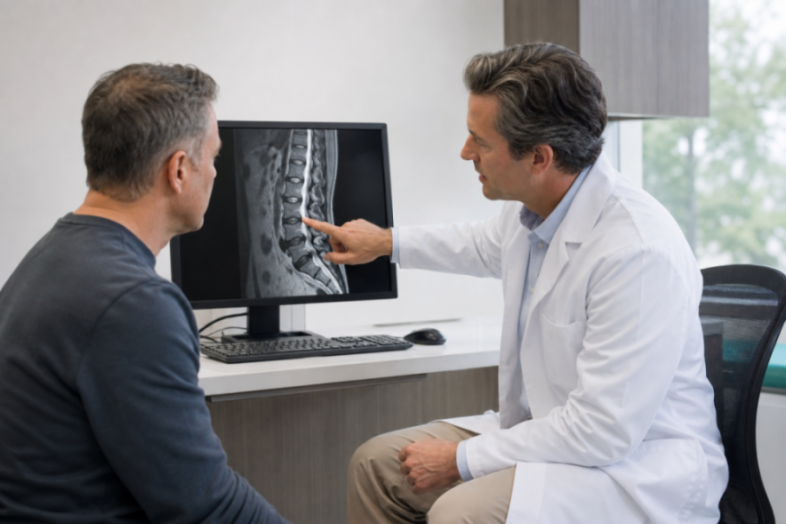
MRI is the preferred imaging study for suspected disc herniation because it visualizes soft tissues and nerve root compression. In select circumstances, CT or X-ray may be used to assess bone or alignment. Imaging interpretation is integrated with the clinical exam — not used in isolation — to determine the source of pain. Authoritative resources such as the Cleveland Clinic and American Academy of Orthopaedic Surgeons provide reliable patient education about disc herniation and imaging expectations (Cleveland Clinic, AAOS).
Nerve Conduction Studies and EMG
When symptoms suggest nerve root or peripheral nerve injury, we use diagnostic nerve testing — nerve conduction studies and electromyography (EMG) — to pinpoint nerve dysfunction and the level of injury. These tests can be especially helpful when imaging and clinical findings are discordant. Learn more about our approach to electrodiagnostic testing on our Nerve Conduction Testing page.
Minimally Invasive, Image-Guided Treatment Options
MK Spine & Joint Rehab emphasizes non‑surgical and interventional options delivered by experienced pain specialists. Treatments are image‑guided and performed on an outpatient basis when appropriate.
Conservative Medical and Rehabilitation Care
Initial treatment often combines medication management for pain control with rehabilitative therapies to restore function. Our team coordinates medication options and creates progressive physical therapy plans that reduce pain, improve mobility and build core strength. For medication-focused plans, see Medication Management. Physical and occupational therapy are integral to long-term recovery and are tailored to each patient’s goals and capabilities.
Image-Guided Injections
Epidural steroid injections and facet injections provide targeted anti‑inflammatory relief aimed at nerve root irritation and facet joint pain. These procedures are performed under fluoroscopic or ultrasound guidance for accuracy and safety. They can provide diagnostic information as well as therapeutic benefit and are described in our overview of Minimally Invasive Procedures.
Percutaneous Disc Decompression
For selected patients with contained disc herniation who have not improved with conservative care, percutaneous disc decompression may reduce disc volume and relieve pressure on nerves while avoiding open surgery. This outpatient, image-guided option can be an alternative to traditional surgical approaches for appropriate candidates. Read more about the technique and candidacy on our dedicated page: How Percutaneous Disc Decompression Can Relieve Chronic Back Pain.
Radiofrequency Ablation and Other Neuromodulation
Radiofrequency ablation (RFA) may be used to treat pain arising from joints or nerves when diagnostic blocks indicate the source. For persistent neuropathic or axial pain, spinal cord stimulators and implanted intrathecal pain pumps are additional minimally invasive options that we evaluate for select patients. Learn more about RFA at Radiofrequency Ablations and discuss advanced neuromodulation with our team when appropriate.
The MK Spine & Joint Rehab Multidisciplinary Approach
What sets our practice apart is the combination of interventional pain management, diagnostic testing, and rehabilitation delivered in a coordinated plan. Your evaluation may include MRI review, electrodiagnostic testing, medication review, targeted injections, and a structured physical therapy program. We emphasize outpatient care, image-guided precision, and individualized planning to restore activity and improve quality of life.
What to Expect During Evaluation and Treatment
Each patient’s pathway is individualized, but common steps include:
- Comprehensive intake and focused physical exam.
- Targeted imaging review (MRI) and, if needed, nerve conduction studies/EMG to localize nerve involvement.
- A treatment plan balancing conservative care (medication and rehab) with image-guided interventions when indicated.
- Follow-up to assess response and adjust therapy, including escalation to advanced procedures if conservative measures are insufficient.
Recovery timelines vary. Some patients experience meaningful relief after a single injection and rehabilitative course; others require staged interventions and longer rehabilitation. We avoid promising a specific outcome, instead focusing on measurable goals such as improved function and reduced reliance on pain medications.
When to Seek Care
Seek prompt evaluation if you experience progressive weakness, loss of bowel or bladder control, severe unrelenting pain, or sudden changes in sensation. For non‑emergent persistent back or leg/arm symptoms that limit activity or work, early assessment can expand non‑surgical options and help prevent chronic disability.
Locations and How to Schedule
MK Spine & Joint Rehab serves Long Island from our Garden City and Hauppauge offices. To schedule a consultation, visit our Garden City office page or our Hauppauge office page. Book an appointment online or call either office to arrange an evaluation tailored to your needs.
Learn More
For patients seeking more information about minimally invasive options and interventional spine care, our site includes detailed resources on procedures and recovery. If you have questions about whether percutaneous disc decompression or image‑guided injections are appropriate for you, contact the clinic to discuss individualized candidacy and next steps.
Note: This article is for educational purposes and does not substitute for individualized medical advice. If you have emergent symptoms, seek immediate care.
Frequently Asked Questions
What symptoms suggest I might have a herniated disc?
Common symptoms include localized back or neck pain, radiating pain down an arm or leg (sciatica), numbness, tingling, or muscle weakness. Symptoms that worsen with coughing or bending may also indicate disc-related nerve irritation. A clinical exam and imaging help confirm the diagnosis.
How is a herniated disc diagnosed at MK Spine & Joint Rehab?
Diagnosis begins with a medical history and physical exam. We commonly use MRI to visualize discs and nerve compression. When nerve involvement is suspected, nerve conduction studies and electromyography (EMG) can localize nerve dysfunction and guide treatment.
What minimally invasive options are available for treating a herniated disc?
Minimally invasive options include image-guided epidural steroid injections, percutaneous disc decompression for selected contained herniations, radiofrequency ablation for facet-related pain, and advanced neuromodulation (spinal cord stimulators or intrathecal pumps) in appropriate cases. We tailor interventions based on diagnostic findings and functional goals.
Will I need surgery for a herniated disc?
Many patients improve with non-surgical interventional treatments and rehabilitation. Surgery may be considered if conservative and minimally invasive therapies fail or if there is progressive neurologic deficit. Our team discusses referrals and surgical options with patients and referring providers when appropriate.
How long does recovery typically take after a minimally invasive procedure?
Recovery varies by procedure and individual factors. Some patients experience relief within days to weeks after injections or decompression, while others require a longer rehabilitation period. Your clinician will outline expectations based on the chosen treatment and your overall health.
Do you offer electrodiagnostic testing locally in Hauppauge and Garden City?
Yes. MK Spine & Joint Rehab provides diagnostic nerve conduction studies and EMG as part of our evaluation when nerve injury is suspected. These tests help confirm the affected nerve and guide targeted treatment.
How can I schedule an appointment for evaluation?
You can book online or call our offices. Visit our Garden City office page or Hauppauge office page to find location details and scheduling information.
How is a herniated disc diagnosed at MK Spine & Joint Rehab?
Diagnosis begins with a medical history and physical exam. We commonly use MRI to visualize discs and nerve compression. When nerve involvement is suspected, nerve conduction studies and electromyography (EMG) can localize nerve dysfunction and guide treatment.