Spinal Cord Stimulators
Are you dealing with chronic pain that affects your everyday life? Spinal cord stimulation may help selected patients manage persistent pain and improve daily function.
Spinal Cord Stimulators in Garden City and Hauppauge, NY
Are you tired of living with ongoing chronic pain that has not improved enough with conservative care? Spinal cord stimulation is a form of neuromodulation that may be considered for selected patients with persistent nerve-related pain affecting the back, trunk, arms or legs.
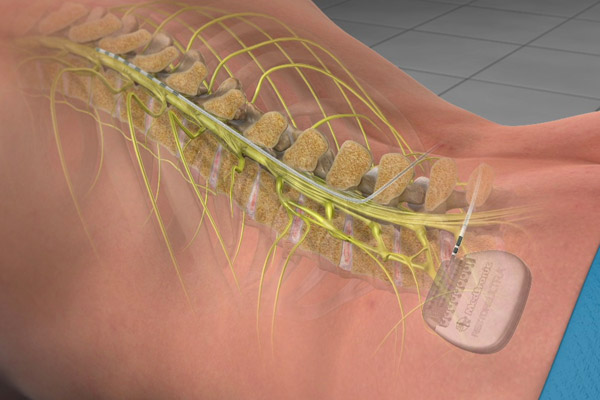
A spinal cord stimulator uses mild electrical impulses to modify certain pain signals before they reach the brain. The system includes a small pulse generator placed beneath the skin and thin leads positioned near the spinal cord. The stimulation does not remove the underlying condition, but it may change how pain is perceived and help improve function for some patients.
Spinal cord stimulators are not appropriate for every type of pain. A complete evaluation is needed to review your diagnosis, symptoms, imaging, previous treatments and overall health. Patients commonly complete a temporary trial before permanent implantation so the physician can determine whether the device provides meaningful benefit.
Evaluations are available through our Garden City office, serving Nassau County, and our Hauppauge office, serving Suffolk County.
How Does a Spinal Cord Stimulator Work?
A spinal cord stimulator in Garden City, NY delivers controlled electrical impulses near the spinal cord to help modify pain signals and provide relief for certain chronic pain conditions. Treatment usually involves an evaluation, a temporary trial and, when successful, permanent implantation. Important parts of the process include:
A careful evaluation: Your provider will review your symptoms, medical history, imaging, prior procedures and response to treatments such as medication management, physical therapy and injections.
A temporary trial: Temporary leads are placed near the spinal cord and connected to an external generator. The trial allows the patient and physician to evaluate pain relief, activity level and device tolerance before permanent implantation.
Permanent implantation: If the trial is successful, a small generator may be implanted beneath the skin through a limited incision. The leads remain positioned near the spinal cord and are connected to the generator.
Programmable stimulation: The device can be adjusted to provide different stimulation patterns and strengths. Programming is customized according to the patient’s symptoms and response.
Ongoing follow-up: Patients need follow-up appointments for programming, monitoring and device management. Rechargeable systems require regular charging, while non-rechargeable systems eventually require generator replacement.
Part of a broader pain plan: Spinal cord stimulation may be combined with rehabilitation and other pain management treatments. It does not guarantee complete pain relief, and results vary by diagnosis and patient.
Frequently Asked Questions About Spinal Cord Stimulators
What is a spinal cord stimulator?
A spinal cord stimulator is an implanted neuromodulation device that sends mild electrical impulses near the spinal cord to modify selected pain signals before they reach the brain.
What conditions may be treated with spinal cord stimulation?
Spinal cord stimulation may be considered for selected patients with chronic nerve-related pain, persistent back or leg pain after spine surgery, complex regional pain syndrome and certain other conditions that have not improved with conservative treatment.
Who may be a candidate for a spinal cord stimulator?
Candidates generally have chronic pain that has not improved enough with medication, therapy, injections or other procedures. A complete medical evaluation and often psychological screening are performed before treatment.
What is a spinal cord stimulator trial?
A trial uses temporary leads connected to an external generator for several days. It allows the patient and physician to assess pain relief, activity and comfort before deciding whether permanent implantation is appropriate.
How is a spinal cord stimulator implanted?
Thin leads are positioned near the spinal cord, and a small generator is implanted beneath the skin, commonly in the lower back or buttock area. The exact technique depends on the device and patient.
Can a spinal cord stimulator be adjusted?
Yes. The device is programmed and adjusted by the medical team. Patients may also receive a controller that allows limited changes within settings prescribed by the provider.
How long does a spinal cord stimulator last?
Device longevity depends on the system. Rechargeable batteries may last many years, while non-rechargeable generators eventually require replacement. Leads and other components may also need revision.
What are the risks of spinal cord stimulation?
Possible risks include infection, bleeding, pain at the implant site, lead movement, device malfunction, spinal fluid leakage, nerve injury and inadequate pain relief. Your physician will explain the risks relevant to your health.
Does insurance cover spinal cord stimulators?
Many insurance plans cover medically necessary spinal cord stimulation, but authorization requirements vary. Insurers may require documentation of conservative treatment, diagnostic findings, a successful trial and psychological screening.
Where can I be evaluated for a spinal cord stimulator on Long Island?
MK Spine & Joint Rehab evaluates patients through our Garden City office, serving Nassau County, and our Hauppauge office, serving Suffolk County. Both locations welcome patients from throughout Long Island.