Nerve Conduction Testing
Want to get to the bottom of your pain? A comprehensive nerve conduction test at our Garden City or Hauppauge office may help identify nerve-related problems and guide an appropriate treatment plan.
Nerve Conduction Testing in Garden City and Hauppauge, NY
Do you feel that something is not right with the way your arms, hands, legs or feet move or feel? Pain, numbness, tingling, weakness or difficulty completing everyday tasks may be related to a nerve or muscle problem. A nerve conduction study may help provide a more accurate diagnosis and guide the next step in your care.
This specialized form of diagnostic testing evaluates how well electrical signals travel through selected nerves. It may be used to help identify nerve-related and neuromuscular conditions that are not always apparent through a physical examination alone.
At MK Spine & Joint Rehab, our pain specialists perform nerve conduction testing for patients experiencing ongoing pain, weakness, numbness or tingling. Testing is available at our Garden City office, serving Nassau County, and our Hauppauge office, serving Suffolk County.
How Does Nerve Conduction Testing Work?
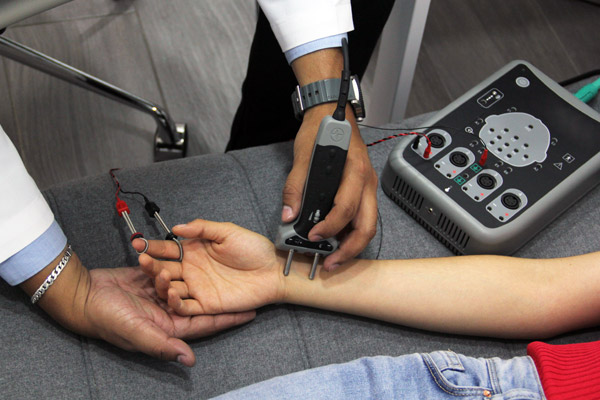
Nerve conduction testing measures how quickly and effectively electrical signals move through selected nerves. It may help identify the location and severity of nerve damage and distinguish nerve-related symptoms from other causes of pain or weakness. Here is what patients should know:
During the test, small electrodes are placed on the skin over specific nerves and muscles. A mild electrical stimulus is delivered to the nerve, and the equipment records how quickly and strongly the signal travels.
The electrical impulses may cause a brief tingling or tapping sensation. Most patients tolerate the test well, although individual sensitivity varies. The number of areas tested depends on the symptoms and the nerves being evaluated.
Nerve conduction testing may be used to help evaluate conditions such as carpal tunnel syndrome, peripheral neuropathy, pinched nerves, radiculopathy and certain neuromuscular disorders.
The results are interpreted together with your medical history, symptoms, physical examination and any imaging or laboratory findings. Testing may be combined with electromyography when additional information about muscle function is needed.
If you have been experiencing persistent pain after a sports injury, work-related injury, motor vehicle accident or chronic illness, testing may help determine whether nerve damage or compression is contributing to your symptoms.
Once the results are reviewed, your provider may recommend a personalized pain management plan, which may include medication management, physical therapy, injections or another treatment based on the diagnosis.
Frequently Asked Questions About Nerve Conduction Testing
What is a nerve conduction test?
A nerve conduction test is a diagnostic study that measures how quickly and effectively electrical signals travel through selected nerves. It can help identify nerve damage, compression or dysfunction that may be causing pain, numbness, tingling or weakness.
What symptoms may lead a doctor to order nerve conduction testing?
Testing may be recommended for persistent numbness, tingling, burning pain, muscle weakness, reduced grip strength or symptoms affecting the arms, hands, legs or feet. The test is ordered based on the patient’s history and examination.
What conditions can nerve conduction testing help diagnose?
Nerve conduction studies may help evaluate carpal tunnel syndrome, peripheral neuropathy, radiculopathy, pinched nerves and certain neuromuscular disorders. Results must be interpreted by a qualified medical professional.
Does a nerve conduction test hurt?
The test uses brief electrical impulses that may feel like a quick tapping, tingling or mild shock. Most patients tolerate the procedure, although comfort levels vary. The sensation stops when each stimulus is completed.
How long does nerve conduction testing take?
The appointment often takes approximately 30 to 60 minutes, depending on how many nerves and areas must be examined. More complex testing may require additional time.
How should I prepare for a nerve conduction test?
Patients are generally asked to keep the skin clean and avoid lotions, oils or creams on the testing area. Wear comfortable clothing and tell the provider about implanted electrical devices, blood-thinning medication or other important medical conditions.
Is nerve conduction testing the same as an EMG?
No. A nerve conduction study measures electrical signals traveling through nerves, while electromyography evaluates electrical activity within muscles. The tests are often performed together because they provide complementary information.
When will I receive my nerve conduction test results?
The timing depends on the testing process and whether additional studies are needed. Your provider will review the findings with your symptoms and examination before explaining the diagnosis and recommended next steps.
Does insurance cover nerve conduction testing?
Many insurance plans cover medically necessary nerve conduction testing, but benefits and authorization requirements vary. Contact your insurance provider to confirm coverage and ask whether a referral or prior authorization is required.
Where can I get nerve conduction testing on Long Island?
MK Spine & Joint Rehab offers nerve conduction testing through our Garden City office, serving Nassau County, and our Hauppauge office, serving Suffolk County. Both locations welcome patients from throughout Long Island.