Introduction
Patients and referring providers in Nassau and Suffolk Counties often ask how less invasive interventions can help with chronic or injury-related spine and nerve pain. At MK Spine & Joint Rehab (Marvin Kalter Spine & Joint, P.C.), our multidisciplinary approach blends diagnostic testing, medication management, rehabilitation, and image-guided, minimally invasive procedures to reduce pain and improve function. This overview explains common procedures, who may benefit, typical expectations, and how these options fit into a comprehensive, outpatient treatment plan at our Garden City and Hauppauge offices.
Why Choose Minimally Invasive Spine Procedures?
Minimally invasive, image-guided procedures are typically performed on an outpatient basis with local anesthesia or light sedation. They can relieve pain, confirm a diagnosis, delay or avoid more extensive surgery, and enable participation in rehabilitative therapies. Because they use targeted delivery or precise tissue modification, these procedures generally have shorter recovery times and lower complication rates than open surgery.
Goals of care
- Reduce pain to allow increased activity and participation in physical therapy.
- Provide diagnostic clarity when imaging and symptoms are discordant.
- Offer durable symptom relief when appropriate, often as part of a staged plan.
Common Minimally Invasive Spine Procedures Offered
MK Spine & Joint Rehab provides a range of image-guided interventions. The most commonly used procedures include:
Epidural and Facet Injections
Epidural steroid injections and facet joint injections deliver medication directly near inflamed nerves or painful facet joints under fluoroscopic or ultrasound guidance. These injections may reduce inflammation and pain, clarify which structures are generating symptoms, and create a window for rehabilitation and activity progression. Learn more about these options at our Spinal Epidurals and Facet Injections page.
Radiofrequency Ablation (RFA)
When diagnostic blocks indicate facet-mediated pain, radiofrequency ablation can provide longer-lasting relief by interrupting pain signals at the small medial branch nerves. RFA is an outpatient procedure and is often followed by a period of physical therapy to reinforce improved mechanics. See our information on Radiofrequency Ablations.
Percutaneous Disc Decompression
For selected patients with contained disc herniation causing nerve compression, percutaneous disc decompression can reduce pressure within the disc and on adjacent nerve roots without open surgery. It is most effective in carefully screened cases and performed under imaging guidance. More details are available in our article How Percutaneous Disc Decompression Can Relieve Chronic Back Pain.
Spinal Cord Stimulation (SCS)
Spinal cord stimulation may be offered for chronic neuropathic or postsurgical spine pain that has not responded to other measures. Our practice evaluates candidates and offers trial stimulation to assess benefit before permanent implantation. Read about our evaluation and trial program at Spinal Cord Stimulation: Evaluation and Trial Program in Hauppauge and general device information at Spinal Cord Stimulators.
Pain Pumps (Intrathecal Drug Delivery)
For patients with severe, medication-refractory spine or neuropathic pain who require high systemic doses or have intolerable side effects, implanted intrathecal pumps can deliver medication directly to the spinal fluid in lower systemic doses. This option is considered after thorough evaluation and multidisciplinary discussion.
Joint Injections and Botox for Migraine
Joint injections (shoulder, hip, sacroiliac) and targeted nerve injections can complement spine-directed care. Additionally, Botox injections for chronic migraine are part of our interventional offerings when clinically appropriate; see Botox for Migraines.
How We Decide Which Procedure Is Right
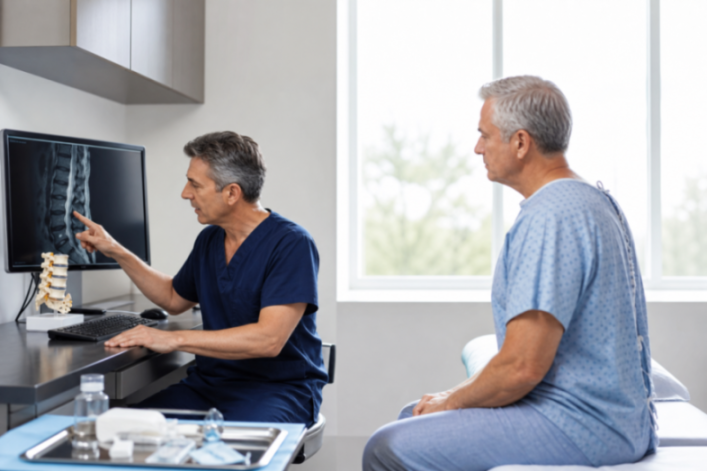
Individualized evaluation is central to safe, effective care. Our assessment typically includes a focused clinical history and exam, review of imaging (MRI/CT/X-ray), and diagnostic nerve testing when needed, such as nerve conduction studies and EMG. Treatment choices depend on symptom pattern, imaging findings, functional goals, prior treatments, medical comorbidities, and patient preferences.
Combining Procedures With Rehabilitation and Medical Management
Procedures are rarely standalone solutions. At MK Spine & Joint Rehab we integrate interventions with medication optimization and structured rehabilitation. Our Physical Therapy team works closely with physicians to translate procedure-related pain relief into improved movement, core strength, and ergonomic strategies that reduce recurrence.
What to Expect: Preparation, Recovery, and Outcomes
Most minimally invasive spine procedures are outpatient with brief recovery times. Preparation may include medication adjustments and routine pre-procedure instructions. After a procedure, patients often experience immediate or gradual pain reduction; some interventions require a short trial period (for example, spinal cord stimulation). We counsel patients on expected timelines, potential side effects, and realistic functional goals. Follow-up appointments ensure continued progress and coordinate next steps in the rehabilitative plan.
Risks and Safety Considerations
Like all medical procedures, minimally invasive spine treatments carry risks such as infection, bleeding, nerve irritation, or inadequate relief. Image guidance, sterile technique, and experienced interventionalists reduce these risks. We prioritize patient safety through careful candidate selection, informed consent, and post-procedure monitoring.
When Surgery May Be an Option
Some patients ultimately require surgical evaluation, particularly when there is progressive neurologic deficit, significant structural instability, or aggressive pathology. Our interventional approach can clarify the pain generator and sometimes postpone or avoid surgery; when surgery is indicated, we collaborate with spine surgeons and referring providers to ensure coordinated care.
Why Choose MK Spine & Joint Rehab in Garden City and Hauppauge
MK Spine & Joint Rehab (Marvin Kalter Spine & Joint, P.C.) offers an integrated, non-surgical/interventional focus for adults living on Long Island who seek relief from spine, nerve, and joint pain. Our team emphasizes individualized evaluation, imaging-guided procedures, outpatient care, and combined medical and rehabilitative treatment plans to improve function and reduce pain. For patients exploring spinal cord stimulation, we provide an evaluation and trial program to determine candidacy and likely benefit; learn more at our SCS program page.
Next Steps: How to Schedule
If you or a patient you refer is considering minimally invasive spine care, book an appointment online or call to schedule a consultation at our Garden City or Hauppauge office. During the visit we will review your history, imaging, and treatment goals and develop a personalized plan that may include diagnostic testing, medications, injections, or a staged interventional strategy combined with rehabilitation.
Call to action: Book an appointment online or call to schedule a consultation at the Garden City or Hauppauge office.
Further Reading and Resources
For more details on our minimally invasive approach to spine care, please see our practice overview at Minimally Invasive Spine Procedures: An Overview of Pain Management in Garden City, NY and our broader non-surgical program in Hauppauge at Comprehensive Non-Surgical Spine Treatment in Hauppauge.
Frequently Asked Questions
What is a minimally invasive spine procedure?
A minimally invasive spine procedure uses small incisions or needle-based, image-guided techniques to diagnose or treat pain-generating structures in the spine. These outpatient interventions aim to reduce pain, minimize recovery time, and enable rehabilitation while avoiding open surgery when possible.
Which procedures are typically done at MK Spine & Joint Rehab?
Our practice offers epidural and facet injections, radiofrequency ablation (RFA), percutaneous disc decompression for select disc herniations, spinal cord stimulation trials and implants, intrathecal pain pumps, joint injections, and Botox for chronic migraines when appropriate.
How do I know if I’m a candidate for a procedure?
Candidacy depends on your symptoms, physical exam, imaging, prior treatments, and overall health. We perform individualized evaluations and, when needed, diagnostic nerve testing and imaging review to recommend the safest and most effective option for your goals.
Are these procedures painful and how long is recovery?
Most procedures use local anesthesia and sometimes light sedation, so discomfort during the procedure is minimal. Recovery is typically brief and done on an outpatient basis. Specific timelines vary by procedure; your clinician will discuss expectations and post-procedure activity guidelines.
Will a procedure eliminate my pain permanently?
While some procedures provide long-lasting relief, outcomes vary by diagnosis and individual factors. Treatments are part of a comprehensive plan that often includes medications and physical therapy to optimize and prolong benefit. We avoid promising guaranteed outcomes and focus on realistic functional goals.
Do you coordinate care with physical therapy and referring providers?
Yes. We emphasize coordinated care. Procedures are often timed to facilitate participation in physical therapy, and we communicate with referring physicians or surgeons as needed to ensure an integrated treatment plan.
How do I schedule a consultation at your Garden City office?
You can book an appointment online through our website or call our offices to schedule a consultation at the Garden City or Hauppauge location. During the visit, we will review your history, imaging, and individualized treatment options.
Which procedures are typically done at MK Spine & Joint Rehab?
Our practice offers epidural and facet injections, radiofrequency ablation (RFA), percutaneous disc decompression for select disc herniations, spinal cord stimulation trials and implants, intrathecal pain pumps, joint injections, and Botox for chronic migraines when appropriate.
How do I know if I’m a candidate for a procedure?
Candidacy depends on your symptoms, physical exam, imaging, prior treatments, and overall health. We perform individualized evaluations and, when needed, diagnostic nerve testing and imaging review to recommend the safest and most effective option for your goals.