Understanding Minimally Invasive Spine Care at a Pain Clinic in Hauppauge
If you live in Suffolk or Nassau County and are managing chronic neck or back pain, a focused, multidisciplinary evaluation can identify targeted, low‑risk options before considering major surgery. At MK Spine & Joint Rehab (Marvin Kalter Spine & Joint, P.C.), our pain clinic in Hauppauge team emphasizes individualized, imaging‑guided, outpatient minimally invasive spine procedures combined with medication management and rehabilitation to help reduce pain and restore function.
Who We Treat
We provide care for adults with persistent or injury‑related spine and nerve pain, including work and sports injuries or motor vehicle accident injuries. Our approach is appropriate for patients who want to explore interventional, non‑surgical options or who need diagnostic procedures to clarify the source of pain.
Comprehensive Evaluation and Diagnostic Testing
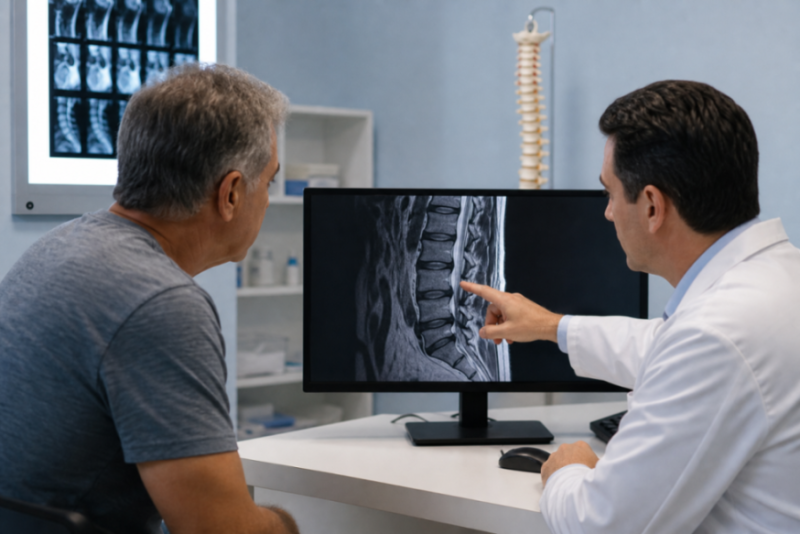
A successful treatment plan begins with a thorough evaluation: medical history, focused physical exam, and review of imaging such as MRI or CT when available. When needed, we perform diagnostic nerve testing (nerve conduction studies and EMG) to assess nerve function. These diagnostic steps guide selection of the safest, most effective minimally invasive options.
Common Minimally Invasive Spine Procedures We Offer
MK Spine & Joint Rehab offers a range of image‑guided, outpatient procedures. Each is selected based on clinical findings and diagnostic testing, and many can be performed with local anesthesia and light sedation.
Epidural Steroid and Facet Injections
Targeted epidural steroid injections and facet joint injections deliver medication directly to the area of inflammation or nerve irritation. Image guidance helps ensure accurate placement. These injections can provide diagnostic information and short‑ to medium‑term pain relief that allows patients to engage more effectively in rehabilitation.
Radiofrequency Ablation (RFA)
For patients with facet‑mediated back or neck pain, radiofrequency ablation uses controlled thermal energy to interrupt pain signals from small nerves supplying the joint. RFA is an outpatient, image‑guided procedure intended to reduce pain and improve function for several months to longer, depending on individual response.
Percutaneous Disc Decompression
Percutaneous techniques can reduce pressure from a contained disc herniation without open surgery. These procedures are performed under imaging guidance and are intended for appropriately selected patients with radicular pain. Learn more about this option at Percutaneous Disc Decompression in Hauppauge and Garden City.
Spinal Cord Stimulation and Trial Programs
When conservative measures and less invasive procedures are insufficient, spinal cord stimulation (SCS) may be considered for chronic neuropathic or radicular pain. We provide a careful evaluation and trial program to assess benefit before permanent implantation. Details about our evaluation and trial pathway are available at Spinal Cord Stimulation: Evaluation and Trial Program in Hauppauge and information about devices is at Spinal Cord Stimulators.
Intrathecal Pain Pumps (Implanted Delivery)
For selected patients with severe, refractory pain, implanted intrathecal pumps deliver medication directly to the spinal fluid at lower systemic doses than oral therapy. These devices are considered when other interventional and medical strategies have been optimized.
Joint Injections and Botox for Migraines
Joint injections support non‑surgical management of facet, sacroiliac, and other joint pain sources. For patients with chronic migraine who meet criteria, Botox therapy is offered as part of a comprehensive headache plan; more on that treatment is available at Botox for Migraines.
Image Guidance and Outpatient Safety
Image guidance (fluoroscopy or ultrasound) is central to safe, precise placement of needles and devices. Most procedures are performed in an outpatient setting with protocols for local anesthesia, conscious sedation when indicated, and same‑day recovery. Our team monitors vital signs and provides post‑procedure instructions to support a safe recovery and timely follow‑up.
Combining Procedures With Medication Management and Rehabilitation
Interventional procedures are most effective when integrated into a broader plan that includes medication optimization, physical therapy, and, when appropriate, occupational therapy. At our practice we coordinate interventional treatments with medication management and rehabilitation programs to maximize functional improvement. Learn about our rehab offerings at Physical Therapy and our broader non‑surgical care at Comprehensive Non‑Surgical Spine Treatment in Hauppauge.
What to Expect: Before, During and After a Procedure
- Before: Your visit will include consent, review of medications (including blood thinners), and pre‑procedure instructions. Bring a driver if sedation is planned.
- During: Procedures are typically brief. We use local anesthesia and imaging guidance to target the treatment area precisely. You will be monitored throughout.
- After: Most patients go home the same day with written aftercare guidance and a follow‑up plan to assess pain relief and next steps, such as starting or advancing rehabilitation.
Is Minimally Invasive Treatment Right for Me?
Minimally invasive options are appropriate for many—but not all—spine pain conditions. Decisions are individualized based on diagnostic testing, imaging, functional goals, and medical history. We discuss benefits, risks, and alternatives, including when referral for surgical evaluation may be appropriate.
Coordinating Care With Referring Providers
We partner with primary care physicians, orthopedic and neurosurgical colleagues, and therapists to ensure coordinated decision‑making. Referring providers can expect detailed communications about diagnostic findings and procedure outcomes to support ongoing care.
How to Schedule an Evaluation in Hauppauge
If you are seeking specialized, imaging‑guided, minimally invasive spine care on Long Island, you can visit our Hauppauge office page for location details. Book an appointment online or call to schedule a consultation at the Garden City or Hauppauge office. Our team will review your history, imaging, and prior treatments to develop a personalized plan.
Why Choose MK Spine & Joint Rehab
Our practice emphasizes a multidisciplinary, patient‑centered approach that integrates diagnostic testing, evidence‑based interventional techniques, medication management, and rehabilitative care. To learn about our broader team and philosophy, see About.
Next Steps
If pain is limiting your daily life, an individualized consultation can clarify options and next steps. Minimally invasive procedures often provide meaningful symptom relief when selected carefully and combined with rehabilitation and appropriate medical care. Book an appointment online or call to schedule a consultation at our Garden City or Hauppauge office.
Frequently Asked Questions
What types of spine pain are treated at MK Spine & Joint Rehab in Hauppauge?
We treat adults with chronic or injury‑related spine and nerve pain, including back and neck pain from degenerative changes, contained disc herniations, facet joint pain, radiculopathy (nerve compression), and pain following workplace or motor vehicle injuries. Treatment is individualized based on evaluation and diagnostic testing.
Are minimally invasive procedures performed as outpatient treatments?
Yes. Most image‑guided, minimally invasive procedures at our clinic are performed on an outpatient basis, often using local anesthesia and light sedation. Patients typically go home the same day with recovery instructions and follow‑up plans.
How do I know if a procedure like radiofrequency ablation or an epidural injection is right for me?
Decisions are based on your history, physical exam, imaging, and diagnostic tests such as nerve conduction studies or selective diagnostic injections. We discuss the expected benefits, risks, and alternatives to help you choose the most appropriate option.
What is the role of rehabilitation after a procedure?
Rehabilitation (physical or occupational therapy) helps restore strength, flexibility, and function after a procedure. Many procedures are intended to reduce pain enough to allow more effective participation in therapy, which supports longer‑term improvement.
Does MK Spine & Joint Rehab offer spinal cord stimulation trials?
Yes. We provide a structured evaluation and trial program to determine whether spinal cord stimulation (SCS) provides meaningful pain relief before considering permanent implantation. See details at https://mkspinejoint.com/spinal-cord-stimulation-evaluation-and-trial-program-in-hauppauge/.
Will an injection or procedure make me pain‑free permanently?
No procedure can guarantee permanent, total pain relief. Many interventions provide meaningful reduction in pain and improved function for varying durations. We combine interventional treatments with medication management and rehabilitation to maximize outcomes.
How do I schedule an appointment at the Hauppauge office?
You can book an appointment online via our website or call the office to schedule a consultation. Visit the Hauppauge office page for location and contact details: https://mkspinejoint.com/hauppauge-office/.
What types of spine pain are treated at MK Spine & Joint Rehab in Hauppauge?
We treat adults with chronic or injury‑related spine and nerve pain, including back and neck pain from degenerative changes, contained disc herniations, facet joint pain, radiculopathy (nerve compression), and pain following workplace or motor vehicle injuries. Treatment is individualized based on evaluation and diagnostic testing.
Does MK Spine & Joint Rehab offer spinal cord stimulation trials?
Yes. We provide a structured evaluation and trial program to determine whether spinal cord stimulation (SCS) provides meaningful pain relief before considering permanent implantation. See details at https://mkspinejoint.com/spinal-cord-stimulation-evaluation-and-trial-program-in-hauppauge/.