
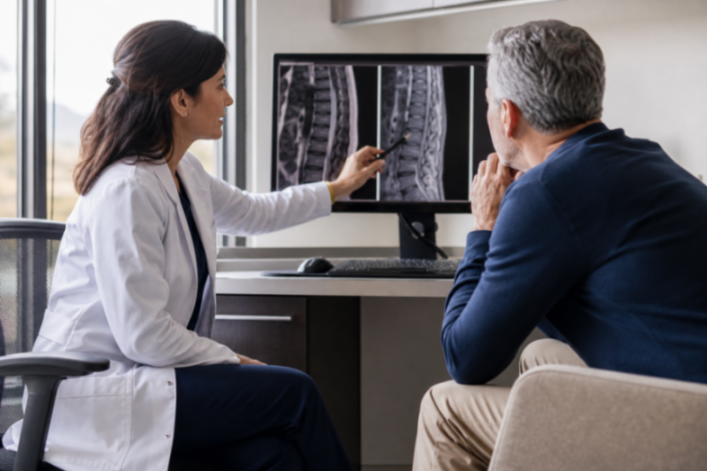
If you live in Garden City or nearby Long Island communities and are coping with chronic spine, nerve or joint pain, MK Spine & Joint Rehab (Marvin Kalter Spine & Joint, P.C.) combines compassionate evaluation with evidence‑based, minimally invasive treatments to help you regain function. Our Garden City team evaluates each patient individually and uses diagnostic testing, image‑guided procedures and coordinated rehabilitation to develop a plan tailored to your needs. Our Garden City office serves patients across Nassau County and adjacent Long Island neighborhoods, with same‑day outpatient procedures for many treatments to minimize disruption to work and family life.
Comprehensive, individualized evaluation
Your first visit centers on understanding how pain affects your daily life, work and activities. The assessment includes a thorough medical history, focused physical exam and review of prior imaging. When nerve dysfunction is suspected, we perform diagnostic nerve testing such as nerve conduction studies and EMG to localize nerve injury and guide treatment.
To make the most of the initial visit, please bring any recent imaging (MRI/CT on CD or available digitally), a current list of medications including over‑the‑counter supplements, your insurance and photo ID, and notes about how symptoms change with activity or position. A short symptom diary (when pain is worst/what relieves it) often helps our team prioritize diagnostic steps.
Why choose MK Spine & Joint Rehab in Garden City?
MK Spine & Joint Rehab is a Long Island practice dedicated to non‑surgical and interventional pain care. Our approach is multidisciplinary: we combine medication optimization, targeted interventional procedures and rehabilitative therapies to reduce pain and restore function. Learn more about our team and philosophy on our About page.
Local, accessible outpatient care
Our Garden City location offers outpatient evaluations and many image‑guided procedures that allow patients to return home the same day. For appointment details, visit the Garden City Office page or Contact Us to schedule.
Diagnostic tools that inform treatment
Careful diagnosis helps avoid ineffective or unnecessary treatments. In addition to reviewing MRI/CT imaging, we use electrodiagnostic testing (nerve conduction studies/EMG) to evaluate peripheral nerve and muscle disorders. Imaging guidance during procedures improves accuracy and safety.
Minimally invasive, image‑guided treatment options
We offer a broad range of minimally invasive procedures performed under imaging guidance to target the source of pain precisely. These include:
- Epidural and facet injections for back and radicular pain
- Radiofrequency ablation (RFA) to provide longer‑lasting relief from facet‑joint pain
- Percutaneous disc decompression for selected contained disc herniations
- Spinal cord stimulation and implantable intrathecal pain pumps for refractory neuropathic or severe chronic pain
- Joint injections and Botox for chronic migraine when appropriate
Some specifics to help you decide which option may be appropriate: percutaneous disc decompression is typically considered for patients with a contained disc protrusion producing radicular symptoms but without major motor loss; radiofrequency ablation is often used when diagnostic blocks reproduce facet pain and relief typically becomes apparent over days to a few weeks, with full benefit often reached within several weeks; spinal cord stimulation generally begins with a temporary trial to confirm symptom reduction before permanent implant placement. For a concise overview of our procedural philosophy and techniques, see Minimally Invasive Procedures and our guide to Interventional Spine Techniques.
Medication management as part of a coordinated plan
Medications can reduce pain and enable participation in rehabilitation. Our team tailors medication plans to each patient’s medical history, functional goals and safety considerations. For details on pharmacologic strategies and monitoring, see our Medication Management page.
Rehabilitation: restoring function, not just treating pain
Procedures and medications are most effective when combined with rehabilitation. Our outpatient physical and occupational therapy programs focus on strength, flexibility, posture and activity modification to support lasting improvement. We coordinate closely with licensed physical therapists in the area to create practical home exercise programs and activity progressions. Learn more about the role of therapy at Physical Therapy.
Specialized options for complex pain
For patients with persistent neuropathic pain or prior treatment failures, we offer advanced options such as spinal cord stimulation and intrathecal pumps. We also provide medical cannabis evaluations where clinically appropriate to determine whether it should be part of a comprehensive plan (Medical Marijuana).
Working with referring providers and care teams
We partner closely with primary care physicians, orthopedists, neurologists and physical therapists to coordinate care for patients after work injuries, motor vehicle accidents or playing/sports injuries. Clear communication and shared treatment goals help patients transition between outpatient care settings and procedural interventions.
When to consider interventional care
As a general decision guide, patients who have not achieved meaningful improvement after several weeks of conservative care (activity modification, targeted physical therapy, and medication optimization) — commonly 6–12 weeks — may benefit from interventional evaluation. In other cases, severe radicular pain, progressive neurologic symptoms (numbness, weakness), or intolerable functional limitations prompt earlier referral. For urgent concerns — sudden bowel or bladder dysfunction, saddle anesthesia, or rapidly worsening weakness — seek emergency care immediately and notify our office for follow‑up.
What to expect during a procedure visit
Pre‑procedure planning includes reviewing imaging and medications and confirming consent. Many procedures are performed on an outpatient basis with local anesthesia and conscious sedation when needed. Image guidance (fluoroscopy or ultrasound) helps the physician place treatments precisely, which can improve outcomes and reduce complications. Typical same‑day visits include a short recovery period after the procedure; most patients are discharged with written post‑procedure instructions and a plan for rehabilitation and follow‑up within 1–2 weeks. Expect short activity restrictions (often 24–48 hours) and guidance on when to resume work or driving. If you experience fever, new severe weakness, worsening numbness or increasing pain after a procedure, contact our office or seek emergency care.
Safety, outcomes and realistic goals
We emphasize realistic, functional goals — such as returning to work, improving sleep and regaining activity tolerance — rather than absolute guarantees of being pain free. Interventional procedures can significantly reduce pain for many patients, but outcomes vary depending on diagnosis and individual factors. Our clinicians will discuss expected benefits, risks and the anticipated timeline for recovery.
How to schedule an appointment
To schedule a consultation, contact us or book online. You can request care at our Garden City location or at our Hauppauge office: Hauppauge Office. When you call or book, our team will guide you through paperwork, insurance questions and what to bring to your first visit.
Resources and further reading
We encourage patients to learn about common pain conditions and treatment options from authoritative sources. Trusted resources include the American Academy of Pain Medicine (painmed.org) and the National Institute of Neurological Disorders and Stroke (ninds.nih.gov/pain).
If you want to explore our full range of services and conditions we treat, visit our Treatments and Conditions pages.
Take the next step
Living with chronic pain can feel isolating; you don’t have to navigate it alone. Our Garden City team provides thoughtful assessment, image‑guided interventions and coordinated rehabilitation tailored to your goals. Book an appointment online or call to schedule a consultation at the Garden City or Hauppauge office.
Frequently Asked Questions
What conditions does a pain management doctor in Garden City treat?
Our practice treats a wide range of spine, nerve and joint pain conditions including degenerative spine disease, radiculopathy, facet‑joint pain, neuropathic pain, chronic migraines, osteoarthritis and pain after injury or motor vehicle accidents. We tailor evaluation and treatment to each patient’s diagnosis and goals.
Do I need a referral to see MK Spine & Joint Rehab?
Many patients are seen without a referral, but insurance plans vary. If you have questions about referrals or authorization, our staff can help when you call to schedule or visit the Contact Us page.
What is an EMG or nerve conduction study and why might I need one?
Nerve conduction studies and electromyography (EMG) evaluate how well peripheral nerves and muscles are functioning. These tests can help localize nerve injuries, distinguish between nerve and muscle disorders, and guide treatment decisions. See our Nerve Conduction Testing page for more.
Are epidural injections or facet injections safe?
When performed by experienced clinicians using imaging guidance, epidural and facet injections are generally safe outpatient procedures. As with any intervention, there are risks that the physician will review with you, and safety protocols are followed to minimize complications.
How long does relief from radiofrequency ablation last?
Radiofrequency ablation (RFA) can provide several months to over a year of pain relief for facet‑mediated pain in many patients. Duration varies among individuals, and RFA may be repeated if appropriate. Discuss expected benefits and alternatives with our team.
Will I need physical therapy after a procedure?
Often, yes. Rehabilitation helps maximize the benefits of procedures and medications by improving strength, flexibility and movement patterns. We coordinate closely with therapists to ensure a plan that supports long‑term function.
How do I schedule an appointment at the Garden City office?
You can book online or call our office to schedule. Visit the Garden City Office page for address and directions, or use the Contact Us page to reach our scheduling team.
When should I seek urgent care for back or leg pain?
Seek emergency care if you develop sudden bowel or bladder incontinence, new saddle anesthesia (numbness in the groin), rapidly worsening leg weakness, or signs of infection such as fever with severe back pain. For progressive but less acute symptoms, contact our office so we can arrange timely evaluation.
Do I need a referral to see MK Spine & Joint Rehab?
Many patients are seen without a referral, but insurance plans vary. If you have questions about referrals or authorization, our staff can help when you call to schedule or visit the Contact Us page.