
Understanding Arthritis and When to Seek Specialist Care
Arthritis describes inflammation and degeneration within a joint that can cause pain, stiffness and loss of function. For adults in Nassau and Suffolk counties, early evaluation helps identify the type of arthritis (osteoarthritis, inflammatory arthritis, post‑traumatic changes) and the best combination of treatments. At MK Spine & Joint Rehab (Marvin Kalter Spine & Joint, P.C.), our teams in Hauppauge and Garden City provide individualized, evidence‑based care to reduce pain and preserve activity.
Comprehensive Evaluation: More Than Just a Diagnosis
A thorough arthritis evaluation at our practice begins with a detailed history and physical examination focused on how symptoms affect daily life, work and recreation. We review prior imaging and perform targeted testing when needed. Diagnostic tools include X‑rays and, when appropriate, advanced imaging. For nerve symptoms or suspected neuropathy, we integrate electrodiagnostic testing such as nerve conduction studies and EMG.
This multidisciplinary approach supports a tailored plan that may combine medication adjustments, focused injections, and rehabilitative therapies. Learn more about our practice and philosophy on our About page: https://mkspinejoint.com/about/.
What Are Image‑Guided Joint Injections?
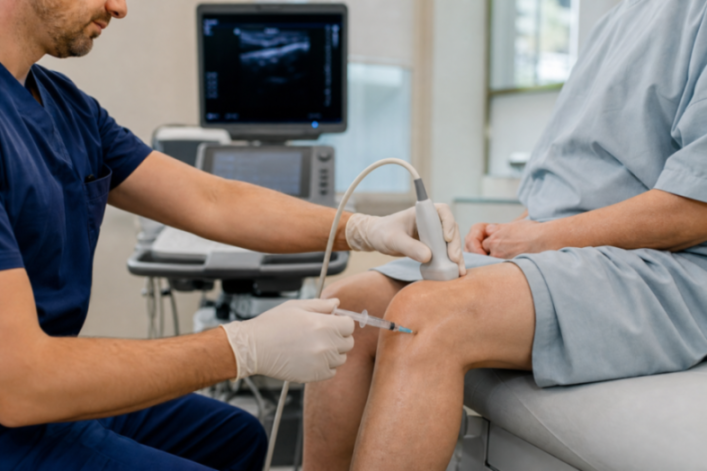
Image‑guided joint injections use real‑time visualization—typically ultrasound or fluoroscopy—to place medication precisely into a joint or around nearby structures. Common medications include corticosteroids for inflammation and local anesthetic for diagnostic or short‑term relief. Guidance improves accuracy compared with blind, landmark‑based injections, especially in small or deep joints.
Why image guidance matters
- Higher accuracy in needle placement
- Reduced risk of injecting unintended tissues
- Improved diagnostic clarity when injections are used to confirm a pain generator
Typical Candidates for Joint Injections
Patients who may benefit from image‑guided joint injections include those with symptomatic:
- Knee osteoarthritis causing activity‑limiting pain
- Shoulder (glenohumeral or acromioclavicular) arthritis or adhesive capsulitis
- Hip osteoarthritis where conservative measures have failed
- Small joint arthritis (e.g., wrist or ankle) where precise placement is important
We also consider injections for patients with persistent pain after injury, or in those who need short‑term relief to engage effectively in rehabilitation.
What to Expect During an Image‑Guided Injection Visit
Image‑guided injections are performed on an outpatient basis in our clinic. After confirming the treatment plan, we prepare the area with sterile technique. Using ultrasound or fluoroscopy, the clinician localizes the joint and advances the needle under continuous visualization. The procedure typically takes 10–30 minutes.
Most patients experience immediate numbness from the local anesthetic and gradual improvement from the corticosteroid over several days to a week. Some patients feel better for weeks to months; others may have shorter relief. We do not claim permanent cures, but use injections strategically as part of a broader plan to improve function.
Risks, Safety and Alternatives
Image‑guided joint injections are low‑risk but not without potential side effects. These can include transient pain at the injection site, localized infection (rare), post‑injection flare, or temporary blood sugar elevation in diabetic patients. Your clinician will review the risks and benefits in the context of your medical history.
When injections are not appropriate or provide limited benefit, alternative or complementary options include medication management, structured physical therapy, radiofrequency ablation for facet or genicular nerves, or referral for surgical consultation. MK Spine & Joint Rehab provides integrated Medication Management (https://mkspinejoint.com/treatments/medication-management/) and coordinates with our rehabilitation services to optimize outcomes.
How Injections Fit Into a Multidisciplinary Plan
Joint injections are most effective when combined with rehabilitative strategies. After an injection reduces pain, patients can often participate more fully in targeted physical therapy to strengthen muscles, improve joint mechanics and reduce relapse risk. Our practice emphasizes coordinated care: we work with physical therapists to develop progressive plans that begin during the early recovery phase and advance as pain allows. Learn about our on‑site Physical Therapy services: https://mkspinejoint.com/treatments/physical-therapy/.
Procedural Options and Advanced Interventions
For patients with persistent pain despite conservative measures and targeted injections, we offer a range of minimally invasive procedures. These include spinal and peripheral nerve interventions, radiofrequency ablation for longer‑term denervation of pain‑generating nerves, and implantable devices when indicated. See our overview of minimally invasive options here: https://mkspinejoint.com/treatments/minimally-invasive-procedures/.
Selecting the Right Office for Your Care
MK Spine & Joint Rehab serves Long Island from two convenient locations, each staffed by experienced interventionalists and rehabilitation specialists. You can learn more or schedule care at our Hauppauge office: https://mkspinejoint.com/hauppauge-office/, or our Garden City office: https://mkspinejoint.com/garden-city-office/. Both sites offer outpatient procedures with image guidance and coordinated follow‑up care.
Preparing for Your Visit and Aftercare
Before a scheduled injection, bring a list of current medications, including blood thinners, and any imaging reports. We will advise whether to continue or temporarily stop certain medications based on your risks. After the procedure, plan for a short rest period and arrange transportation if you feel unsteady. Follow‑up typically includes a phone check within a few days and a clinic visit to assess response and next steps.
Evidence and Best Practices
Guidelines from professional societies support the targeted use of intra‑articular corticosteroid injections for symptomatic osteoarthritis and endorse image guidance when accuracy affects outcomes. For long‑term management, injections are one element of a multimodal strategy that can include medications, rehabilitation and procedural options when indicated. Reliable clinical guidelines can help patients and referring providers understand appropriate use and expectations (see external resources below).
Scheduling an Appointment
If arthritis pain is limiting your daily life, an individualized evaluation can clarify the cause and the best next steps. Book an appointment online or call to schedule a consultation at the Garden City or Hauppauge office. We will discuss diagnostic options, whether image‑guided joint injection is appropriate, and how that procedure fits into a broader plan to improve function and reduce pain.
Note: This article is informational and does not replace personalized medical advice. If you have acute joint swelling, fever, or signs of infection, seek immediate care.
Frequently Asked Questions
What types of arthritis respond best to joint injections?
Intra‑articular corticosteroid injections are commonly used for symptomatic osteoarthritis and inflammatory flare in a single joint. They can provide anti‑inflammatory relief for degenerative and some inflammatory conditions, but effectiveness varies by joint and individual factors.
Are image‑guided injections more effective than blind injections?
Image guidance (ultrasound or fluoroscopy) improves accuracy of needle placement and can reduce the chance of injecting surrounding tissues. Increased accuracy often translates into better diagnostic clarity and may improve clinical outcomes for certain joints.
How long does pain relief from a joint injection typically last?
Relief from corticosteroid injections can begin within days and may last from weeks to several months. Some patients experience longer benefit, while others have shorter duration. Injections are one tool within a broader management plan.
What are the risks associated with joint injections?
Risks are generally low but can include transient injection‑site pain, infection (rare), bleeding, post‑injection flare, and temporary changes in blood sugar in diabetic patients. Your clinician will review risks based on your medical history.
Will an injection cure my arthritis?
No single injection cures arthritis. Injections can reduce inflammation and pain to allow participation in rehabilitation and daily activities, but long‑term management typically includes exercise, medication management, and sometimes additional procedures.
Can I drive myself home after an injection?
Many patients can drive after an injection, but if you received sedation or feel unsteady, arrange for a ride. We provide specific post‑procedure instructions based on the medication used and your individual response.
How do I schedule an evaluation or injection at MK Spine & Joint Rehab?
You can book an appointment online or call to schedule a consultation at our Garden City or Hauppauge office. Visit our location pages for details and directions: Hauppauge office and Garden City office on our website.
How do I schedule an evaluation or injection at MK Spine & Joint Rehab?
You can book an appointment online or call to schedule a consultation at our Garden City or Hauppauge office. Visit our location pages for details and directions: Hauppauge office and Garden City office on our website.