For adults living with chronic neuropathic or spine-related pain in Nassau and Suffolk counties, a spinal cord stimulator (SCS) can be an effective, reversible option to reduce pain and improve function. At MK Spine & Joint Rehab (Marvin Kalter Spine & Joint, P.C.), our Garden City team offers individualized evaluation, image-guided procedures, and coordinated rehabilitation to determine whether a spinal cord stimulator trial and potential implantation are appropriate for you.
What Is a Spinal Cord Stimulator and Who Is a Candidate?
A spinal cord stimulator is a device that delivers mild electrical pulses to the spinal cord to alter pain signaling before it reaches the brain. Candidates are typically adults with chronic neuropathic pain or failed back surgery syndrome who have not achieved adequate relief from conservative treatments. Candidates often include people with persistent leg or back pain after surgery, complex regional pain syndrome (CRPS), or neuropathic pain related to nerve injury.
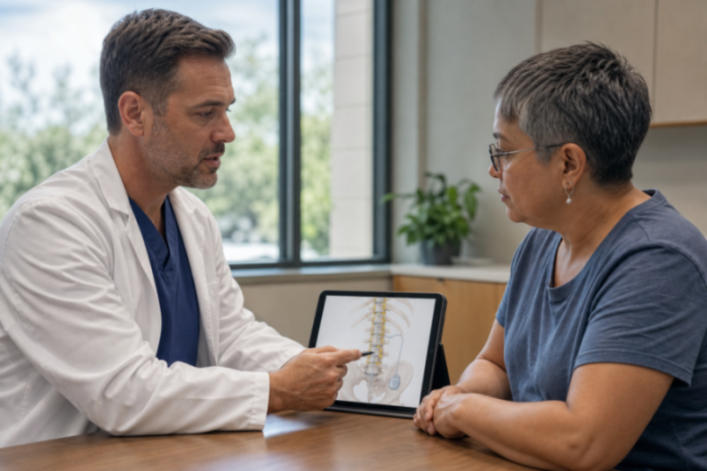
At MK Spine & Joint Rehab, we take a multidisciplinary approach to candidacy that may include a review of your imaging, prior treatments, medication history and rehabilitation goals. Our evaluation integrates diagnostic nerve testing when needed and a comprehensive treatment plan that can include medication management, injections, radiofrequency ablation and physical therapy prior to recommending neuromodulation. Learn more about our general approach to pain management and our range of minimally invasive procedures.
The Role of a Trial Before Implantation
Most centers, including ours, use a temporary trial period before permanent SCS implantation. The trial helps determine whether spinal cord stimulation will meaningfully reduce your pain and improve function. Trials are performed in an outpatient setting and are reversible: if the trial does not provide adequate relief, the temporary leads are removed.
What Happens During a Trial?
- Under local anesthesia and light sedation, a physician places temporary leads in the epidural space using imaging guidance.
- External stimulation is applied for several days to a week to assess pain relief and functional improvement.
- Patients keep a pain and activity diary during the trial to document changes in pain intensity, medication use and daily function.
- At the end of the trial, temporary leads are removed in the clinic. If the trial provides meaningful relief, the team discusses permanent implantation.
Permanent Implantation: What to Expect
Permanent implantation is performed in a sterile outpatient environment. The permanent system includes implanted leads and a pulse generator placed under the skin, typically in the buttock or flank. The procedure is image-guided and tailored to your anatomy and the distribution of your pain.
Typical steps include:
- Placement of permanent leads in the epidural space with fluoroscopic guidance.
- Creation of a small pocket for the pulse generator and connection of the leads.
- Testing and programming to optimize stimulation patterns for your pain distribution.
After implantation, your clinician will schedule follow-up visits for wound checks and device programming. Our team coordinates with rehabilitation services to integrate physical therapy and activity progression as part of the recovery plan. Learn more about our spinal cord stimulator services and how they fit into a broader care plan.
Benefits and Limitations
Benefits reported by patients can include a reduction in pain intensity, decreased reliance on opioid medications, and improved ability to participate in daily activities and rehabilitation. Because the trial phase is reversible, patients can evaluate real-world benefit before committing to a permanent implant.
Limitations to discuss with your clinician include device-related side effects (such as lead migration or pocket discomfort), the need for reprogramming over time, potential interference with certain medical procedures or imaging, and variable insurance coverage. Our staff will review risks, alternatives, and device manufacturer information during informed consent, and we coordinate care with referring providers when surgery or alternative interventions are being considered.
Risks and Recovery
As with any invasive procedure, SCS trials and implantation carry risks, though serious complications are uncommon. Possible risks include infection, bleeding, headache, lead migration or breakage, and persistent or new pain at the implant site. We use sterile technique, imaging guidance and standardized peri-procedural protocols to minimize risk.
Recovery typically involves a brief rest period after implantation, followed by gradual increases in activity. Most patients return to desk or light activities within a few days to weeks; heavier lifting and strenuous activity are restricted for a short period. Our team provides clear post-procedure instructions and coordinates follow-up programming and physical therapy as needed to support functional recovery.
How MK Spine & Joint Rehab Approaches Care
MK Spine & Joint Rehab combines interventional pain techniques with rehabilitative therapies and medication management to create individualized plans. Our approach prioritizes image-guided, minimally invasive procedures and collaborative decision-making. If SCS is a potential option, we ensure you understand the trial process, expected outcomes and how neuromodulation integrates with other treatments such as radiofrequency ablation, injections or rehabilitation exercises.
Patients in Garden City and surrounding Long Island communities can be seen at our Garden City office for consultation and follow-up. Visit our Garden City Office page for location details and directions: https://mkspinejoint.com/garden-city-office/.
Preparing for an Evaluation or Trial
Before your appointment, bring relevant imaging studies, a list of current medications, and records of prior treatments or surgeries. Expect a focused clinical history and physical examination; we may recommend diagnostic testing such as nerve conduction studies or EMG when nerve injury is suspected. Learn more about our diagnostic services at Nerve Conduction Testing.
If you and your clinician decide to proceed with a trial, we will explain pre-procedure instructions (including medication management, fasting and arrival time) and answer questions about what to expect during and after the procedure.
Insurance, Follow-Up and Long-Term Care
Coverage for SCS varies by insurer and plan. Our administrative staff can help verify benefits and explain pre-authorization steps where applicable. Long-term follow-up includes device programming, routine checks, and coordinated care with your referring physicians and rehabilitation providers.
Next Steps
If chronic spine or nerve pain is limiting your life, a discussion about spinal cord stimulation may be warranted after a careful trial of conservative and interventional therapies. To learn more about whether you may be a candidate, schedule a consultation with our Garden City team. Book an appointment online or call to schedule a consultation at the Garden City or Hauppauge office today. Visit our contact page to get in touch: https://mkspinejoint.com/contact-us/.
For general information on SCS devices and safety, patients may find helpful resources from the U.S. Food and Drug Administration and major medical centers linked below.
Frequently Asked Questions
What is the purpose of a spinal cord stimulator trial?
A trial lets you and your clinician evaluate whether spinal cord stimulation reduces your pain and improves function in a reversible outpatient setting before permanent implantation.
How long does the trial period last?
Trials typically last several days to a week, during which temporary leads deliver stimulation while you track pain levels, medication use and activity changes.
Is implantation surgery painful and how long is recovery?
Implantation is done with local anesthesia and sedation in an outpatient setting. Most patients have limited discomfort after the procedure and can resume light activities within days, with specific activity restrictions for several weeks.
Will a spinal cord stimulator eliminate all my pain?
Outcomes vary: many patients experience significant pain reduction and better function, but SCS is not a guaranteed cure. The temporary trial helps predict whether you will benefit.
Are there risks or complications I should know about?
Risks include infection, bleeding, lead migration, device malfunction and localized discomfort. Serious complications are uncommon; we discuss risk mitigation and follow-up care before any procedure.
How does SCS fit with other treatments like physical therapy or medications?
SCS is typically part of a multidisciplinary plan. It can be combined with medication management and rehabilitation to maximize function and may reduce reliance on pain medications over time.
How do I get evaluated for a spinal cord stimulator at MK Spine & Joint Rehab?
Schedule a consultation at our Garden City or Hauppauge office. We perform a comprehensive evaluation, review imaging and prior treatments, and discuss a trial if appropriate. Book online or call our office to arrange an appointment.
How do I get evaluated for a spinal cord stimulator at MK Spine & Joint Rehab?
Schedule a consultation at our Garden City or Hauppauge office. We perform a comprehensive evaluation, review imaging and prior treatments, and discuss a trial if appropriate. Book online or call our office to arrange an appointment.