Compassionate, Individualized Pain Care in Hauppauge
If chronic spine, nerve or joint pain is limiting your work, sports participation or daily life, a local assessment by experienced pain management doctors can clarify diagnosis and expand treatment options beyond medication or major surgery. MK Spine & Joint Rehab (Marvin Kalter Spine & Joint, P.C.) provides multidisciplinary, outpatient, image‑guided nonsurgical care to adults across Long Island, including a dedicated Hauppauge Office. Our team balances interventional procedures, medication strategies and rehabilitative therapies to reduce pain and restore function.
How we approach pain: diagnosis before treatment
Effective treatment begins with a focused, individualized evaluation. At MK Spine & Joint Rehab this commonly includes:
- Complete history and physical exam emphasizing how pain affects daily function.
- Review of prior imaging (X‑ray, MRI, CT) and, when needed, repeat or targeted imaging.
- Electrodiagnostic testing such as nerve conduction studies and EMG to clarify nerve injury or entrapment.
- Discussion of nonsurgical options aligned to your goals—returning to work, sports or daily activities.
This diagnostic-first mindset helps avoid unnecessary procedures and tailors care to each patient’s anatomy, symptoms and lifestyle.
Multidisciplinary treatment options offered
MK Spine & Joint Rehab emphasizes outpatient, minimally invasive and image‑guided treatments working alongside physical and occupational rehabilitation. Common modalities include:
Image‑guided injections and epidurals
Targeted steroid or anesthetic injections—including epidural and facet injections—can decrease inflammation and pain and help patients engage more fully in therapy. These are performed under fluoroscopic or ultrasound guidance for precise placement.
Radiofrequency ablation (RFA)
For sustained neck or low back facet pain that responds to diagnostic blocks, radiofrequency ablation can disrupt pain signals from the joint nerves and often provides months of relief. Learn more about this option in our Radiofrequency Ablations overview.
Minimally invasive spinal procedures
When structural nerve compression or contained disc disease is the source of pain, percutaneous techniques are available that avoid open surgery. These outpatient procedures are image‑guided and designed to reduce tissue trauma and recovery time. Read more about the types of procedures we perform at Minimally Invasive Procedures.
Spinal cord stimulation and implanted pain pumps
For persistent neuropathic or refractory pain, spinal cord stimulators and intrathecal pain pumps are advanced options offered in select patients. These therapies are part of a stepwise, individualized plan when conservative care and less invasive interventions are insufficient.
Medication management
Medication remains an important element of multidisciplinary care. Our team emphasizes rational, guideline‑based use of medications, including non‑opioid options and careful opioid stewardship when clinically necessary. Medication strategies are integrated with procedures and rehab to support functional goals rather than simply suppressing symptoms.
Structured physical and occupational rehabilitation
Treatments are most effective when combined with therapy that restores strength, mobility and movement patterns. Our collaborative approach links interventional care to ongoing rehabilitation to help patients return to the activities that matter most. Explore our Physical Therapy services for more detail.
Conditions commonly treated
Our multidisciplinary team evaluates and treats a broad range of adult musculoskeletal and neuropathic conditions, including:
- Chronic low back and neck pain
- Radiculopathy (sciatica, cervical radiculopathy)
- Facet joint pain and degenerative spine conditions
- Peripheral nerve entrapments and post‑injury neuropathic pain
- Joint pain (shoulder, hip, knee) and osteoarthritis-related symptoms
- Headache disorders, including Botox for chronic migraines
We also frequently manage work‑related, sports and motor vehicle accident injuries with tailored, function‑focused plans.
What to expect at your first visit
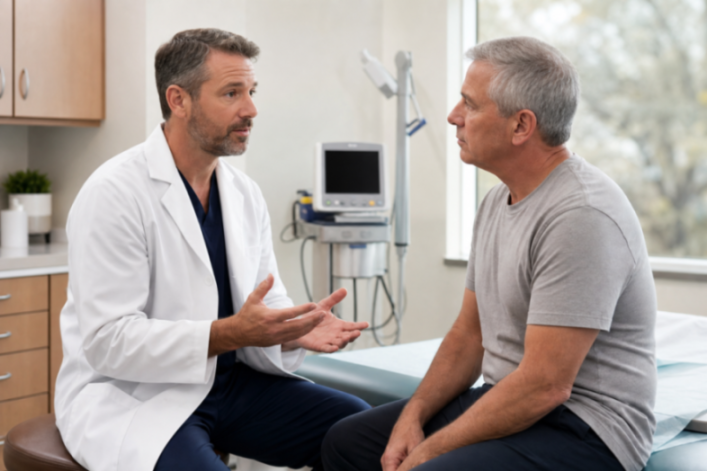
At your initial consultation we will review medical records and imaging, perform a targeted exam, and discuss reasonable next steps. Depending on the findings, next steps may include electrodiagnostic testing, a medication adjustment, a referral to therapy, or an image‑guided diagnostic/therapeutic injection. Our priority is a clear, collaborative plan so you understand the intended goals and expected timeline of benefit.
Why choose a multidisciplinary outpatient practice?
Multidisciplinary care coordinates interventions across specialties to increase the chance of meaningful improvement while minimizing risk. Advantages of the outpatient, image‑guided model include:
- Faster recovery times than open surgery for many conditions
- Precise, imaging‑guided treatments that target pain generators
- An emphasis on restoring function through combined medical and rehabilitative care
- Access to advanced options—RFA, spinal cord stimulation, implanted pumps—when appropriate
Safety, imaging guidance and quality outcomes
Procedures performed under fluoroscopic or ultrasound guidance reduce the risk of misplacement and improve diagnostic accuracy. Our clinicians integrate best‑practice protocols, careful patient selection and follow‑up to track benefit and adjust treatment plans as needed.
Insurance, referrals and how to schedule
We accept many major insurers and work with referring providers to coordinate care. If you are ready to explore nonsurgical options in Hauppauge, you can book an appointment online or call to schedule. For location details and directions, see our Hauppauge Office page. Our team can also advise whether to begin with imaging, electrodiagnostic testing or a targeted interventional consult.
Evidence and guidelines that inform our care
National guidelines support multidisciplinary, noninvasive and interventional approaches tailored to patient symptoms and functional goals. Providers are encouraged to combine physical therapy, reasoned medication use and image‑guided procedures when appropriate rather than defaulting to early major surgery. Trusted resources include the Centers for Disease Control and Prevention and professional pain societies, which emphasize individualized, conservative care pathways.
Next steps
If pain is limiting your life, seeking a focused evaluation is the first step toward a personalized plan. MK Spine & Joint Rehab offers coordinated, compassionate nonsurgical options in Hauppauge and on Long Island—combining interventional techniques, medication strategies and rehabilitative therapy to help you return to meaningful activity. Book an appointment online or call to schedule a consultation at the Garden City or Hauppauge office.
For more about our practice, services and patient resources, visit our main pages on Minimally Invasive Procedures, Physical Therapy and Contact Us.
Frequently Asked Questions
What services do pain management doctors in Hauppauge offer at MK Spine & Joint Rehab?
MK Spine & Joint Rehab provides multidisciplinary, nonsurgical care including diagnostic nerve testing (EMG/nerve conduction), medication management, physical and occupational therapy, image‑guided injections (epidural, facet), radiofrequency ablation, percutaneous disc decompression, spinal cord stimulation, implanted pain pumps, joint injections and Botox for chronic migraines. Medical cannabis evaluations are available when appropriate.
Will I need surgery for my spine or joint pain?
Not necessarily. The practice emphasizes a stepped approach that begins with comprehensive assessment and conservative care: medication optimization, targeted injections, RFA and rehabilitation. Surgery may be considered if conservative and interventional options do not provide adequate relief or if structural factors clearly require surgical correction.
How do image‑guided injections help with pain?
Image guidance (fluoroscopy or ultrasound) allows precise placement of medication at the pain generator—such as an epidural space or facet joint—reducing inflammation and clarifying diagnosis. These injections can reduce pain enough to enable more effective rehabilitation and improve function.
What should I bring to my first appointment?
Bring a list of current medications, records of prior imaging (MRI, CT, X‑rays) if available, reports from previous providers, and any relevant injury documentation (work/sports or motor vehicle accident reports). This helps the team create an efficient, individualized evaluation.
Are advanced options like spinal cord stimulation or pain pumps provided at this practice?
Yes. For select patients with refractory neuropathic or chronic pain, spinal cord stimulators and intrathecal pain pumps are offered as part of a stepwise, multidisciplinary plan when less invasive treatments have been insufficient.
Do you coordinate care with my primary doctor or specialists?
Yes. The practice routinely communicates with referring providers and coordinates imaging, therapy and follow‑up to align care with your overall medical needs and functional goals.
How do I schedule an appointment at the Hauppauge location?
You can book an appointment online or call to schedule a consultation. For location details and directions, visit the Hauppauge Office page or contact the office directly through our Contact Us page.
What services do pain management doctors in Hauppauge offer at MK Spine & Joint Rehab?
MK Spine & Joint Rehab provides multidisciplinary, nonsurgical care including diagnostic nerve testing (EMG/nerve conduction), medication management, physical and occupational therapy, image‑guided injections (epidural, facet), radiofrequency ablation, percutaneous disc decompression, spinal cord stimulation, implanted pain pumps, joint injections and Botox for chronic migraines. Medical cannabis evaluations are available when appropriate.