
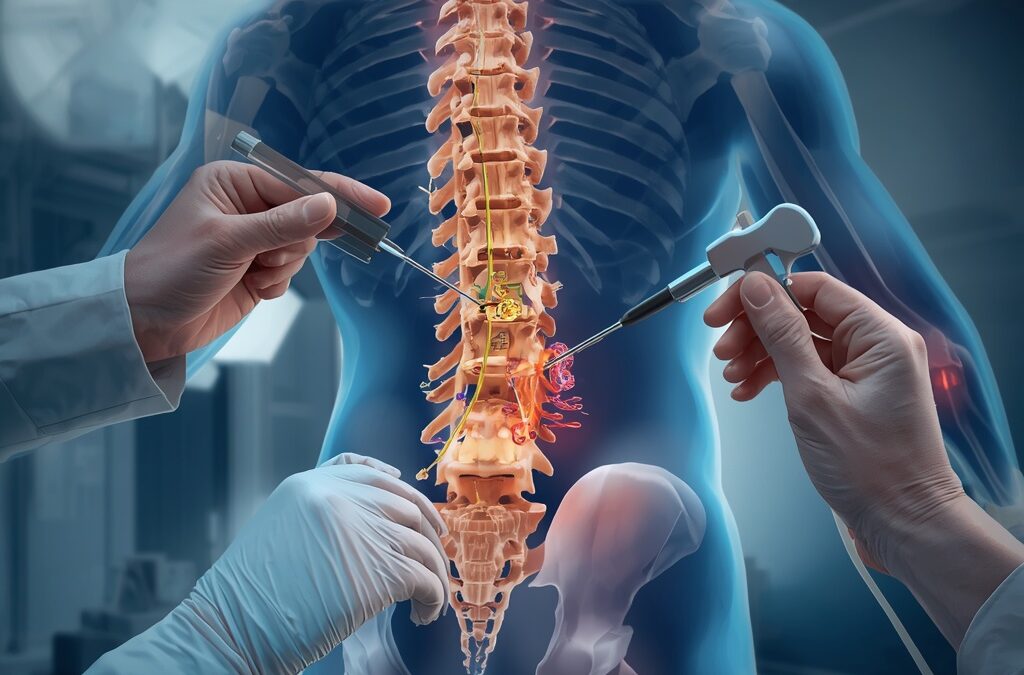
Percutaneous disc decompression is a minimally invasive procedure that reduces pressure on spinal discs and surrounding nerves without open surgery. It offers faster recovery, lower risk, and meaningful pain relief for patients with herniated discs, degenerative disc disease, and other common spinal conditions. Chronic back pain affects an estimated 65 million Americans, with around 16 million adults experiencing persistent pain severe enough to limit daily activity, according to the Health Policy Institute at Georgetown University. For many people, that means months or even years of discomfort, reduced mobility, and a quality of life that steadily declines. Surgery has traditionally been viewed as the most definitive solution for serious spinal conditions. But it carries real risks, long recovery periods, and is not always the right fit for every patient. The good news is that non-surgical alternatives have advanced considerably, and one of the most promising options available today is percutaneous disc decompression. If you are looking for lasting relief without going under the knife, this guide will walk you through everything you need to know, including how the procedure works, who it is right for, and what you can realistically expect from treatment.
What Is Percutaneous Disc Decompression?
Percutaneous disc decompression is a minimally invasive spine procedure designed to relieve pressure within a damaged or bulging spinal disc. The word “percutaneous” simply means “through the skin,” which gives you a clear picture of how different this is from traditional open surgery. Rather than making large incisions to access the spine, a physician inserts a small needle or probe directly into the affected disc using real-time imaging guidance. From there, a small amount of disc material is removed or treated to reduce the internal pressure. This, in turn, takes the strain off surrounding nerves, which are often the source of pain, numbness, or weakness. Traditional back surgery typically involves general anesthesia, significant tissue disruption, hospital stays, and extended recovery periods. Percutaneous disc decompression, by contrast, is generally performed on an outpatient basis using only local anesthesia. Patients go home the same day. The procedure relies on advanced, cutting-edge imaging technology, including fluoroscopy or CT guidance, to ensure precision throughout. This level of accuracy allows pain specialists to target the exact source of the problem without disturbing healthy surrounding tissue.
How Does Percutaneous Disc Decompression Work?
Spinal discs sit between each vertebra and act as shock absorbers for the spine. When a disc becomes damaged, whether through injury, aging, or wear and tear, it can bulge outward or herniate, pressing against nearby nerves. That pressure is what causes the radiating pain, tingling, and weakness many patients experience. Percutaneous disc decompression works by reducing the volume of disc material, which lowers the internal pressure inside the disc. Even a small reduction in pressure can have a significant effect. According to research published in various pain medicine journals, the pressure inside a disc drops dramatically when even a small percentage of disc volume is removed, which can be enough to pull the disc away from the nerve it was compressing. Depending on the technology used, the procedure may involve:
- Mechanical removal of disc tissue using a small rotating probe
- Radiofrequency energy to shrink and vaporize a portion of the disc
- Laser energy to reduce disc volume with targeted heat
Each approach shares the same core goal: decompress the disc, relieve nerve pressure, and restore function.
Benefits of Percutaneous Disc Decompression
Patients who are good candidates for this procedure often experience meaningful improvements across several areas. Here are the key advantages worth knowing:
- Faster recovery time. Because the procedure is minimally invasive, most patients return to light daily activities within a few days rather than weeks or months.
- Reduced reliance on medication. Many patients are able to decrease their use of pain medications following a successful decompression procedure.
- Lower surgical risk. There is no need for general anesthesia, and the risk of infection, blood loss, or complications is significantly lower than with open surgery.
- Outpatient convenience. The procedure is typically completed within an hour, and patients go home the same day.
- Preserved spinal structure. Because no major tissue is removed or disrupted, the structural integrity of the spine remains intact.
- Improved quality of life. Reduced pain often translates directly into better sleep, improved mobility, and the ability to participate in activities that chronic pain had previously made difficult.
Who Is a Good Candidate for Percutaneous Disc Decompression?
Not every back pain patient will benefit from this procedure, and a thorough evaluation is essential before moving forward. Percutaneous disc decompression is most commonly used to treat:
- Herniated discs, where disc material has pushed outward and is pressing on a nerve
- Degenerative disc disease, a condition common in herniated disc Hauppauge and Garden City patients seen at pain management clinics
- Bulging discs that have not responded to conservative treatments
- Discogenic pain, where the disc itself is the primary source of discomfort
In general, ideal candidates are patients who:
- Have experienced back or leg pain for at least six weeks
- Have not found sufficient relief through physical therapy, medication management, or other conservative treatments
- Have imaging results (such as an MRI or CT scan) that confirm disc involvement as the source of pain
- Do not have severe spinal instability or certain structural abnormalities that would require surgical correction
Patients who are currently exploring pain management in Hauppauge or Garden City often find that a consultation with a board-certified specialist helps clarify whether they fall within this candidate profile.
The Importance of Proper Diagnosis
Before any treatment plan is created, an accurate diagnosis is critical. A skilled pain management doctor in Garden City or Hauppauge will conduct a thorough evaluation that typically includes:
- A detailed medical history review, including the onset, location, and character of your symptoms
- A physical examination to assess mobility, strength, and nerve function
- Diagnostic imaging, such as MRI, CT scan, or X-ray, to identify the exact source and extent of disc damage
- Nerve conduction testing, which may be recommended to evaluate nerve involvement
From there, a personalized treatment plan is developed. No two patients are the same, and the best outcomes come from care that is tailored to the individual, not applied as a one-size-fits-all solution. At MK Spine & Joint Rehab, Dr. Kalter takes this personalized approach seriously, educating patients throughout the process and providing clarity at every step.
What to Expect During Treatment
Knowing what lies ahead can make the experience far less intimidating. Here is a general overview of the process: Before the procedure:
- You will discuss your medical history and any current medications with your care team
- Imaging results will be reviewed to plan the precise approach
- The procedure area will be cleaned and local anesthesia applied
During the procedure:
- You will be awake and lying comfortably on a procedure table
- Using real-time imaging guidance, the physician inserts a thin needle or probe into the targeted disc
- The decompression is carried out with precision, and the instrument is then removed
- The entire process typically takes 30 to 60 minutes
After the procedure:
- Most patients are monitored briefly before being discharged the same day
- Mild soreness at the insertion site is normal and typically resolves within a few days
- Light walking is usually encouraged shortly after the procedure
- Most patients resume normal activities within one to two weeks, depending on their individual recovery
Patient Outcomes and What the Research Shows
Clinical outcomes for percutaneous disc decompression are encouraging, particularly for well-selected patients. Studies have reported that a significant portion of appropriate candidates experience meaningful pain relief and improved function following the procedure. For patients dealing with herniated disc conditions in Hauppauge and Garden City, the procedure has helped many avoid more invasive spine surgery while still achieving real reductions in pain. Success tends to be highest when the procedure is combined with a broader pain management strategy that may include physical therapy in Garden City, spinal cord stimulation in Hauppauge for more complex cases, or medication management in Garden City to support recovery. The goal is not simply to reduce pain in the short term. It is to help patients return to the activities they value, whether that is playing with their grandchildren, returning to work, or getting back on the golf course.
Take the Next Step Toward a Pain-Free Life
Chronic back pain does not have to be permanent. If you have been living with disc-related pain and have not found lasting relief through conservative care, percutaneous disc decompression in Hauppauge and Garden City may be worth exploring. The specialists at MK Spine & Joint Rehab are board-certified and experienced in the full range of minimally invasive spine treatments, including percutaneous decompression, radiofrequency ablation in Garden City, spinal cord stimulator options in Garden City, NY, and much more. Every patient receives a thorough evaluation and a treatment plan built around their specific needs. Ready to find out if this procedure is right for you? Book a consultation with MK Spine & Joint Rehab today and take the first step toward lasting relief.