
Radiofrequency Ablation
Looking for a minimally invasive option for chronic pain? The pain specialists at MK Spine & Joint Rehab offer radiofrequency ablation evaluations in Garden City and Hauppauge.
Radiofrequency Ablation in Garden City and Hauppauge, NY
Are you struggling with chronic pain that has not improved with medication, physical therapy or other conservative care? Radiofrequency ablation in Garden City & Hauppauge, NY, also called RFA, is a minimally invasive procedure that may provide longer-lasting relief for selected types of nerve-related pain without open surgery.
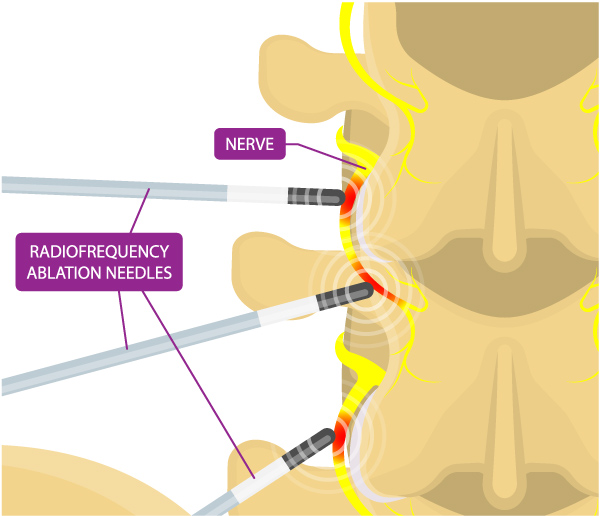
Radiofrequency ablation uses controlled electrical energy to heat a small area of targeted nerve tissue. This interrupts certain pain signals traveling from the affected area to the brain. The procedure is commonly performed with imaging guidance so the physician can accurately position the treatment needle near the intended nerve.
RFA may be considered for some patients with chronic neck pain, back pain, arthritis-related facet joint pain or other conditions in which a specific nerve has been identified as a source of discomfort. It does not treat every form of pain, and a diagnostic nerve block may be performed first to determine whether the targeted nerve is likely to respond.
Evaluations are available through our Garden City office, serving Nassau County, and our Hauppauge office, serving Suffolk County.
How Does Radiofrequency Ablation Work?
Radiofrequency ablation is designed to reduce pain signals from a carefully selected nerve. The procedure, recovery and duration of relief vary by patient and diagnosis. Important parts of the treatment process include:
Diagnostic evaluation: Your provider will review your symptoms, medical history, physical examination and imaging. A diagnostic nerve block may be used to confirm that a specific nerve is contributing to your pain.
Image-guided treatment: During the procedure, a specialized needle is positioned near the targeted nerve using X-ray or another imaging method. A small electrode then delivers controlled radiofrequency energy.
Outpatient care: RFA is commonly performed as an outpatient procedure. Patients may experience temporary soreness, numbness or muscle discomfort near the treatment area.
Gradual improvement: Pain relief may not be immediate. Some patients notice improvement within days, while others may need several weeks as the treated nerve stops transmitting pain signals.
Temporary but potentially lasting relief: Treated nerves can regenerate over time. Relief may last for several months or longer, but results differ and the procedure may eventually need to be repeated.
Part of a larger treatment plan: RFA may be combined with physical therapy, medication management or other pain management treatments based on your diagnosis.
Frequently Asked Questions About Radiofrequency Ablation
What is radiofrequency ablation?
Radiofrequency ablation is a minimally invasive procedure that uses controlled electrical energy to heat a small area of targeted nerve tissue and reduce certain pain signals.
What conditions may be treated with radiofrequency ablation?
RFA may be considered for selected cases of chronic neck pain, back pain, arthritis-related facet joint pain and other conditions in which a specific nerve has been identified as a pain source.
How do I know whether I am a candidate for RFA?
Your physician will review your symptoms, examination, imaging and previous treatments. A diagnostic nerve block may be performed first to determine whether temporarily numbing the suspected nerve reduces your pain.
Does radiofrequency ablation hurt?
Local anesthetic and, when appropriate, light sedation may be used. Patients may feel pressure or temporary discomfort during the procedure and soreness afterward. Individual experiences vary.
How long does a radiofrequency ablation procedure take?
The procedure often takes approximately 30 to 90 minutes, depending on the number and location of nerves being treated. Additional time may be needed for preparation and recovery monitoring.
How soon will I feel relief after RFA?
Some patients notice relief within several days, while others may need two to four weeks. Temporary soreness or increased discomfort can occur before the treated nerve stops transmitting pain signals.
How long do radiofrequency ablation results last?
Relief may last several months or longer, but results vary. Because nerves can regenerate, pain may eventually return and a repeat procedure may be considered if medically appropriate.
What are the risks of radiofrequency ablation?
Possible risks include soreness, bruising, bleeding, infection, temporary numbness, nerve irritation or weakness. Serious complications are uncommon but possible. Your physician will review risks specific to your health and treatment area.
Does insurance cover radiofrequency ablation?
Many insurance plans cover medically necessary RFA, but prior authorization and diagnostic block requirements vary. Contact your insurer and review our patient resources before treatment.
Where can I be evaluated for radiofrequency ablation on Long Island?
MK Spine & Joint Rehab evaluates patients through our Garden City office, serving Nassau County, and our Hauppauge office, serving Suffolk County. Both locations welcome patients from throughout Long Island.